


In Additive Manufacturing, market-bound steel is taken into account the fastest-growing phase. However what precisely is steel FFF 3D printing and what are the unbeatable benefits of this method? Uncover it now!
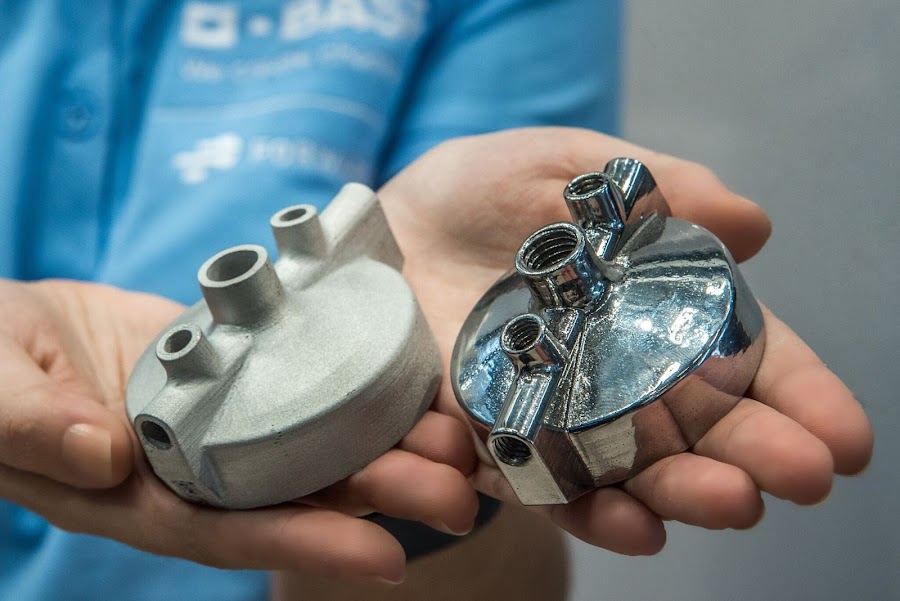
Ultrafuse 316L steel filament makes prototyping and creating one-off customized steel elements a breeze!
Metallic FFF sees the steel powder certain along with a polymer that’s then melted and extruded out of a heated print head. That half known as the inexperienced half and isn’t but the completed product. It should be debound to extract the binder after which sintered in a furnace to fuse the particles collectively into the ultimate product.
One of many benefits of this methodology in comparison with strategies like steel binder jetting is the accessibility and price. Metallic FFF is feasible to print on low-cost desktop machines. This will save hundreds of {dollars} in funding prices.
A 3D-printed steel half needs to be debound and sintered. This will’t occur at house nor are debinding stations simply accessible. Subsequently Ahead AM (BASF 3D Printing Answer Model) affords the choice to e-book debinding and sintering slots at MatterHackers.
Ahead AM affords two completely different steel filaments: Ultrafuse® 316L and Ultrafuse® 17-4 PH.
Ahead AM has developed Ultrafuse® 316L to supply high-quality steel elements and excessive throughput. This state-of-the-art steel filament is appropriate to be used with any typical Fused Filament Fabrication (FFF) printer.
Ultrafuse® 316L is cost-effective, simple to course of and meets the MIM {industry} commonplace for catalytic debinding and sintering.
The steel filament formulates thermoplastic binders with round 90 mass p.c of extremely refined steel particles. The Ahead AM filament has a non-slip floor permitting it to be utilized in most Bowden or direct-drive extruders. Because of its excessive flexibility, it may be fed by complicated loafer pulleys and a number of filament transportation methods in printers – no additional drying is required. As a filament, the metal-polymer composite comes with not one of the occupational and security hazards related to the dealing with of high quality metallic powders, making 3D printing of stainless-steel elements inexpensive, easy, and protected.
Following the print, the ultimate properties of the half are then achieved by a debinding and sintering course of developed by BASF, which has emerged because the {industry} commonplace. Elements printed with Ultrafuse® 316L get hold of their last properties, together with hardness and power
This progressive industry-grade metal-polymer composite helps a broad vary of purposes, together with tooling, jigs and fixtures, small collection manufacturing, purposeful elements, prototypes, and even jewellery.
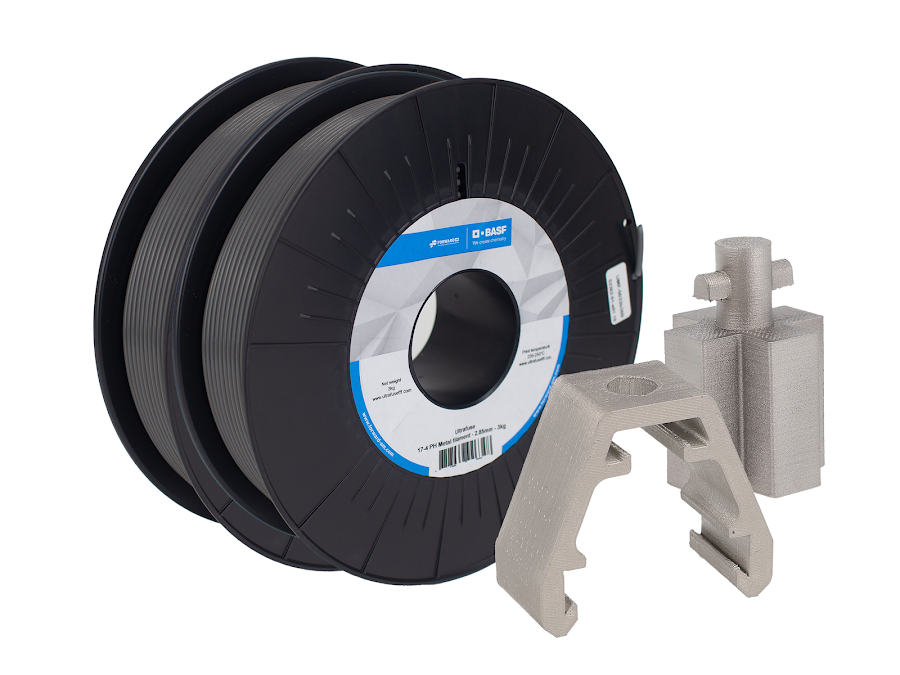
Ultrafuse 17-4 PH steel filament is on the market in a 1kg spool beginning at simply $129.
Ultrafuse® 17-4 PH is the second steel filament in Ahead AM’s portfolio. It permits chrome steel elements for purposes that require excessive hardness and mechanical power. It’s due to this fact ultimate for Petrochemistry, Aerospace, and Automotive purposes comparable to tooling, jigs and fixtures, and purposeful prototyping.
Like Ultrafuse® 316L, 17-4 PH is simple to make use of and an inexpensive 3D printing steel filament. With its good corrosion resistance and the truth that it may be moreover hardened by warmth remedy, it´s excellent for industrial purposes.
For the printed Elements there may be a variety of post-processing choices doable.
If you wish to learn how different corporations work with Ultrafuse® 17-4 PH try Ahead AM’s latest Use Case with WKW about the advantages of 3D printed prototypes.