


A lot of a corporation’s Most worthy data sits in paperwork comparable to contracts, product manuals, analysis stories, assist runbooks, and monetary filings. This content material is saved in Amazon Easy Storage Service (Amazon S3) as structured information (JSON, NDJSON, and JSON array) and unstructured information (PDF, Phrase, textual content, and Markdown). Generative AI functions, Retrieval Augmented Technology (RAG) assistants, and enterprise search experiences are solely pretty much as good as their entry to this content material. But it’s typically the toughest information to make discoverable and searchable. To extract this information, clients should run advanced ingestion pipelines with a number of steps:
- Working a doc parser that extracts textual content whereas maintaining the structure, studying order, and tables.
- Extracting and decoding the charts, diagrams, and screenshots inside these paperwork.
- Chunking and processing the extracted textual content by means of an embedding mannequin and writing the outcomes right into a vector index.
Every layer brings its personal infrastructure, scaling choices, and failure modes. The complexity compounds, and plenty of organizations spend weeks to make it work finish to finish.
At present, we’re excited to announce Amazon OpenSearch clever ingestion, a completely managed and serverless ingestion functionality in Amazon OpenSearch Serverless (NextGen). You begin out of your assortment, level to your information in Amazon S3, and select the way it needs to be processed. Clever ingestion then handles the remainder: it discovers your content material from S3, parses the paperwork, describes the photographs, chunks the content material, generates vector embeddings, and indexes the outcomes. There are not any pipelines to configure, no doc processing infrastructure to function, and no capability to measurement forward of time.
With clever ingestion, you’ll be able to:
- Go from uncooked paperwork to semantic search with out handbook pipelines. Ingest PDF, Phrase, and Markdown information, parsed with their structure and tables intact, into indexes prepared for semantic and hybrid search.
- Make visible content material searchable. When paperwork comprise charts, diagrams, screenshots, or pictures, a vision-language mannequin writes detailed textual content descriptions. You’ll be able to then discover info that solely seems in photos.
- Ingest structured information with out pipeline code. Load JSON, NDJSON, and CSV information and apply transformations throughout ingestion, with optionally available semantic search enrichment.
- Select one-time or steady ingestion streams. Use Ingestion Jobs for one-time or periodic masses comparable to migrations and backfills. Use Ingestion Streams to maintain your index repeatedly in sync as new objects arrive in your bucket.
- Pay just for lively processing. Capability scales routinely along with your workload, and also you aren’t charged for idle ingestion capability.
On this submit, we clarify how clever ingestion works and when to make use of Ingestion Jobs or Ingestion Streams. We then stroll by means of ingesting a batch of unstructured paperwork from Amazon S3 and processing their contents into RAG-ready intelligence in Amazon OpenSearch Serverless (NextGen). You’ll be able to ingest logs and structured information with the identical workflow. Load JSON, NDJSON, and JSON array information, comparable to software logs, audit trails, or product catalogs, from Amazon S3 and apply transformations throughout ingestion, with optionally available semantic enrichment. Your RAG data base and your log analytics can share a single ingestion expertise.
Resolution overview
Clever ingestion runs inside Amazon OpenSearch Serverless (NextGen) collections and manages the entire path out of your S3 bucket to your index. Once you create an Ingestion Job or an Ingestion Stream, you solely must specify two issues:
- The supply – An Amazon S3 bucket and prefix that comprise your information.
- The vacation spot – The index in your Amazon OpenSearch Serverless (NextGen) assortment the place the processed information lands.
From there, clever ingestion runs the next steps for you.
- Information discovery: Clever ingestion routinely scans the objects below your S3 prefix. For Ingestion Streams, it detects new objects as they arrive utilizing Amazon Easy Queue Service (Amazon SQS) notifications.
- Doc parsing: When PDF and Phrase information are detected, clever ingestion routinely parses them into structured content material, maintaining headings, studying order, and tables.
- Picture understanding: When it detects photos within the PDF and Phrase information, it generates wealthy textual content descriptions so visible content material will be listed alongside the encircling textual content.
- Chunking and embedding: Clever ingestion splits content material into chunks sized for retrieval and generates vector embeddings utilizing OpenSearch Computerized Semantic Enrichment.
- Indexing: Clever ingestion writes the chunks, sparse embeddings, and metadata into your index and scales capability up and down for the workload, inside your predefined OpenSearch Compute Unit (OCU) limits for the gathering group.
Ingestion Jobs or Ingestion Streams
| Ingestion Jobs | Ingestion Streams | |
| Use when | You might have a set dataset to load as soon as | Your information retains arriving or altering |
| Typical eventualities | Preliminary masses, migrations, backfills, proofs of idea | Information bases that develop, repeatedly up to date doc libraries |
| Conduct | Ingests all objects below the prefix, then completes | Retains the index in sync as new objects arrive |
Conditions
To comply with together with this submit, you want:
- An AWS account with permissions to create and handle Amazon OpenSearch Serverless (NextGen) collections.
- An Amazon S3 bucket containing your information.
- An AWS Identification and Entry Administration (IAM) function and the permissions required for clever ingestion to learn from Amazon S3.
The way it works
Ranging from the AWS Administration Console web page for Amazon OpenSearch Serverless, now you can see a brand new Ingestion tab. You can begin by selecting Create ingestion job, or evaluation the prevailing jobs on this tab.
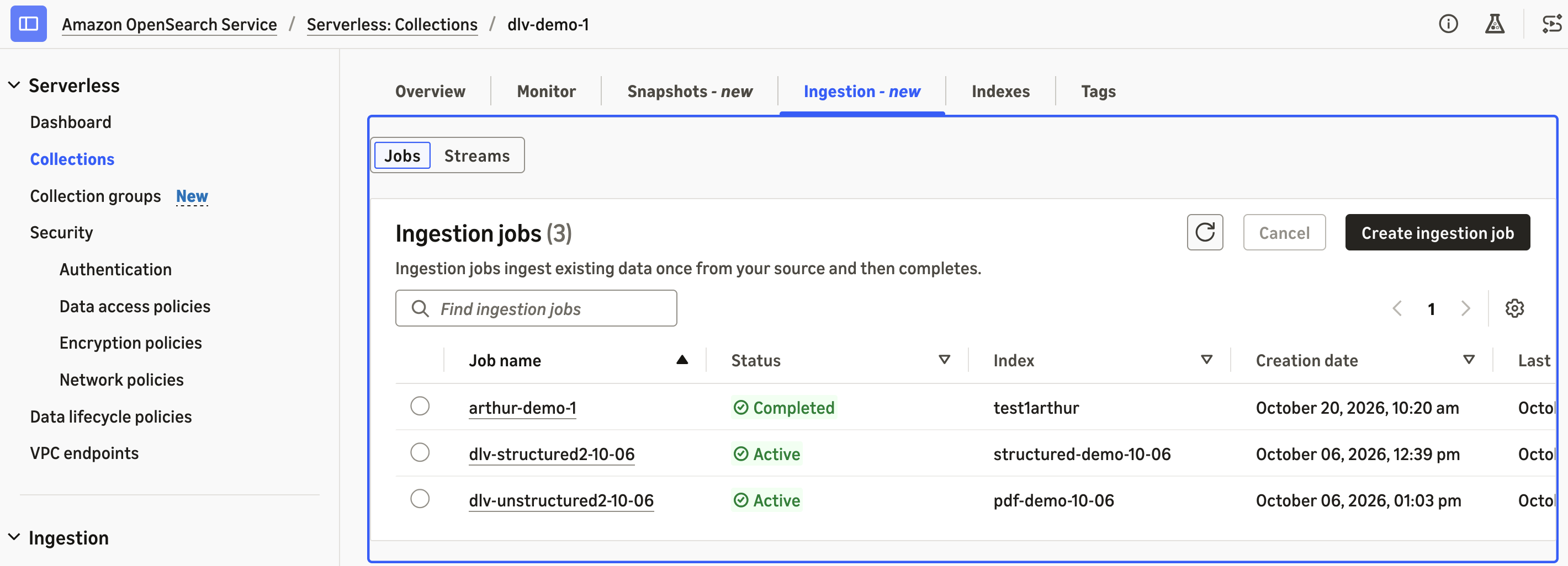
Determine 1: The Ingestion tab on the Amazon OpenSearch Service console
Clever ingestion helps three modes for various supply configurations. For a static dataset on Amazon S3, choose One-time batch to ingest it as soon as, and the ingestion job routinely terminates after completion.
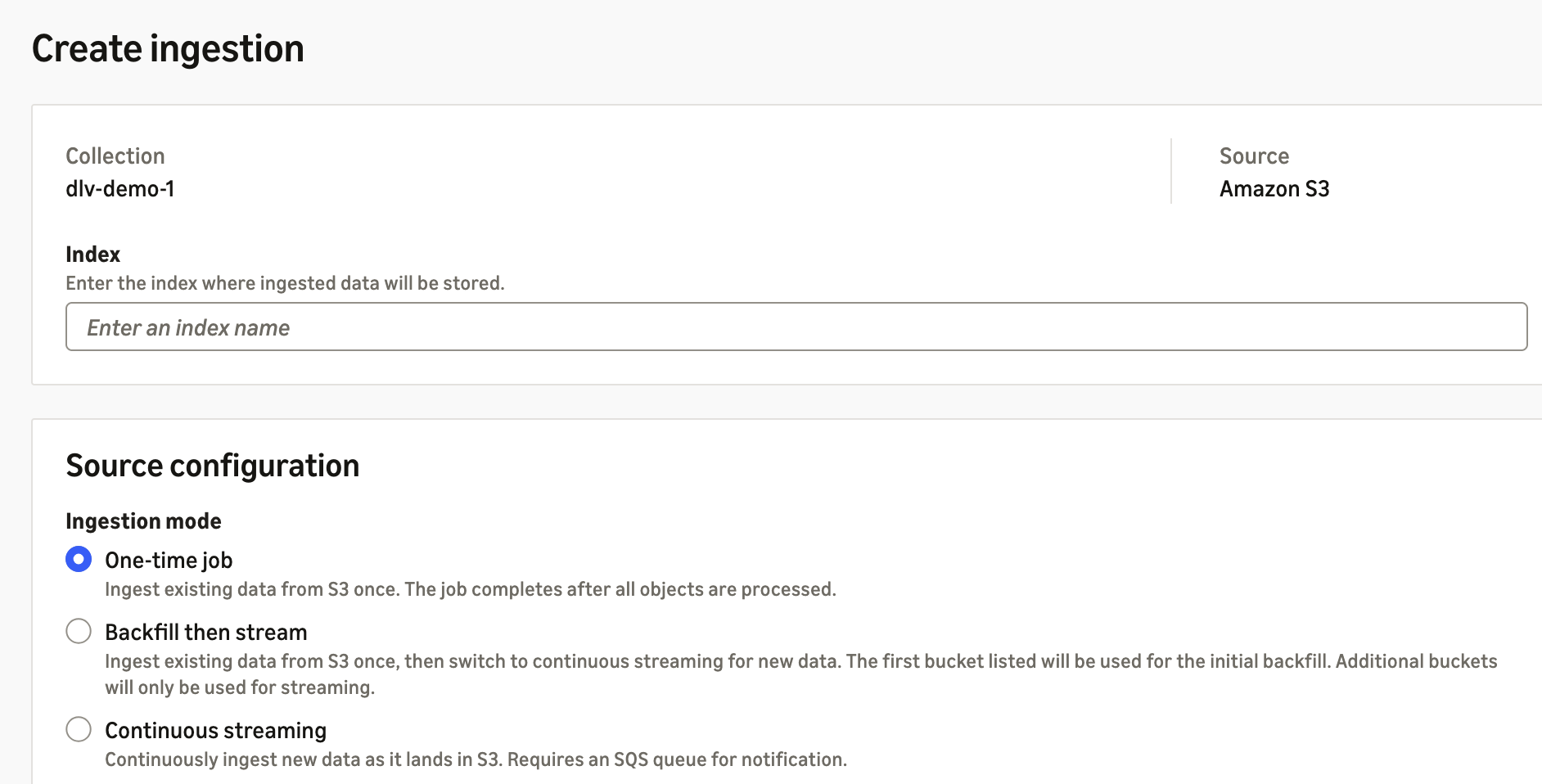
Determine 2: Choosing the One-time batch ingestion mode
For brand spanking new S3 buckets which might be about to obtain new information enter, choose Steady streaming to repeatedly monitor notifications and ingest when new information turns into out there. If the S3 bucket already has some information in it, choose Batch then stream to ingest the prevailing information after which change to steady streaming mode. For each eventualities, clever ingestion depends in your Amazon SQS queue to obtain Amazon S3 object notifications, and requires the Amazon Useful resource Identify (ARN) of an IAM function to imagine and function it for information ingestion.
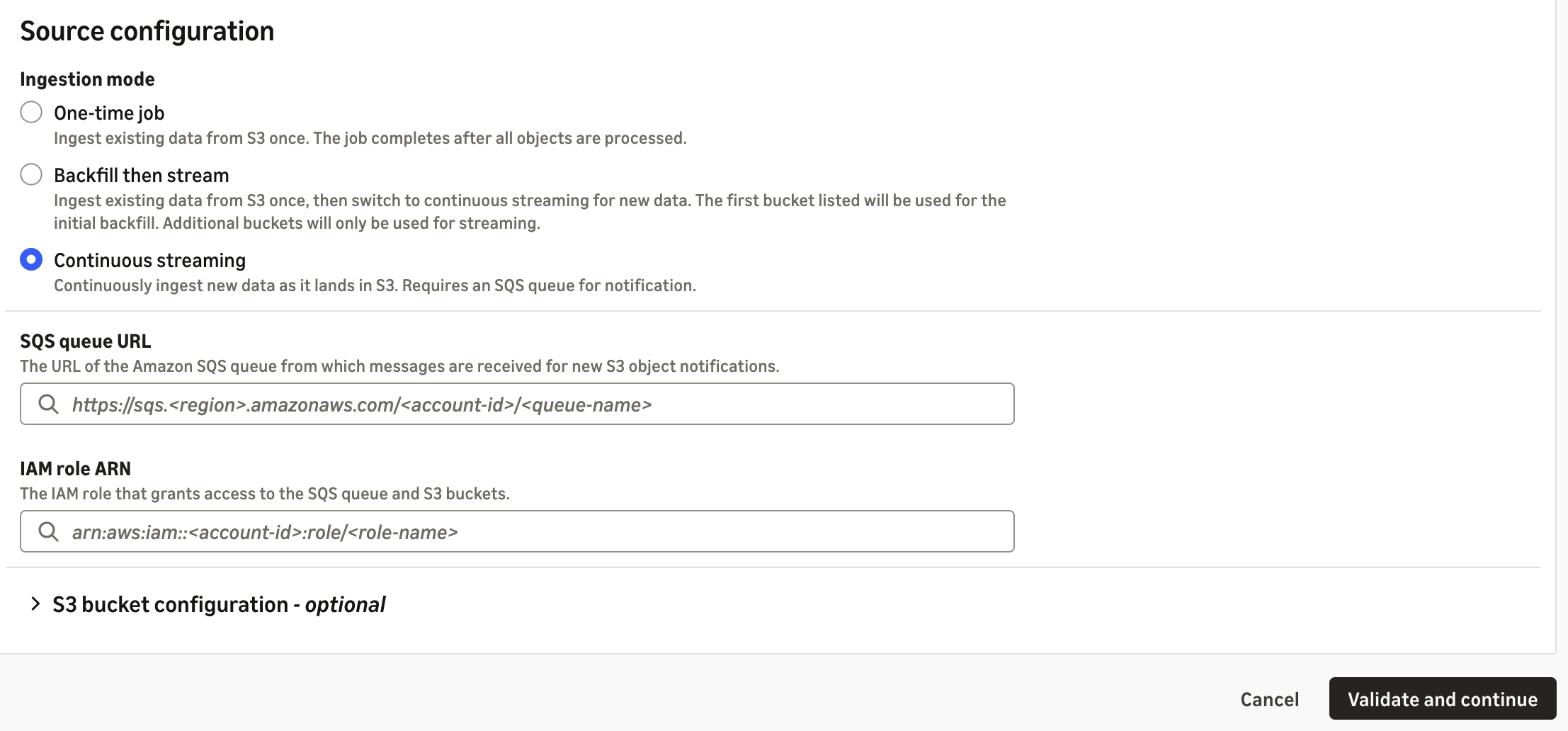
Determine 3: Configuring steady streaming with an Amazon SQS queue and IAM function
Backfill then stream works as a mixture of the opposite two modes. You’ll be able to specify one bucket for the preliminary backfill and extra buckets for streaming new information.
The clever ingestion function works routinely with S3 buckets inside the identical AWS account. You’ll be able to browse for the S3 bucket inside this web page, and optionally outline a prefix to specify which folders or information inside the bucket needs to be ingested. Clever ingestion additionally works with S3 buckets in a distinct AWS account. For cross-account, you could present the opposite AWS account ID, together with the Amazon S3 bucket, IAM function ARN, and optionally Amazon SQS in that account to entry each assets.
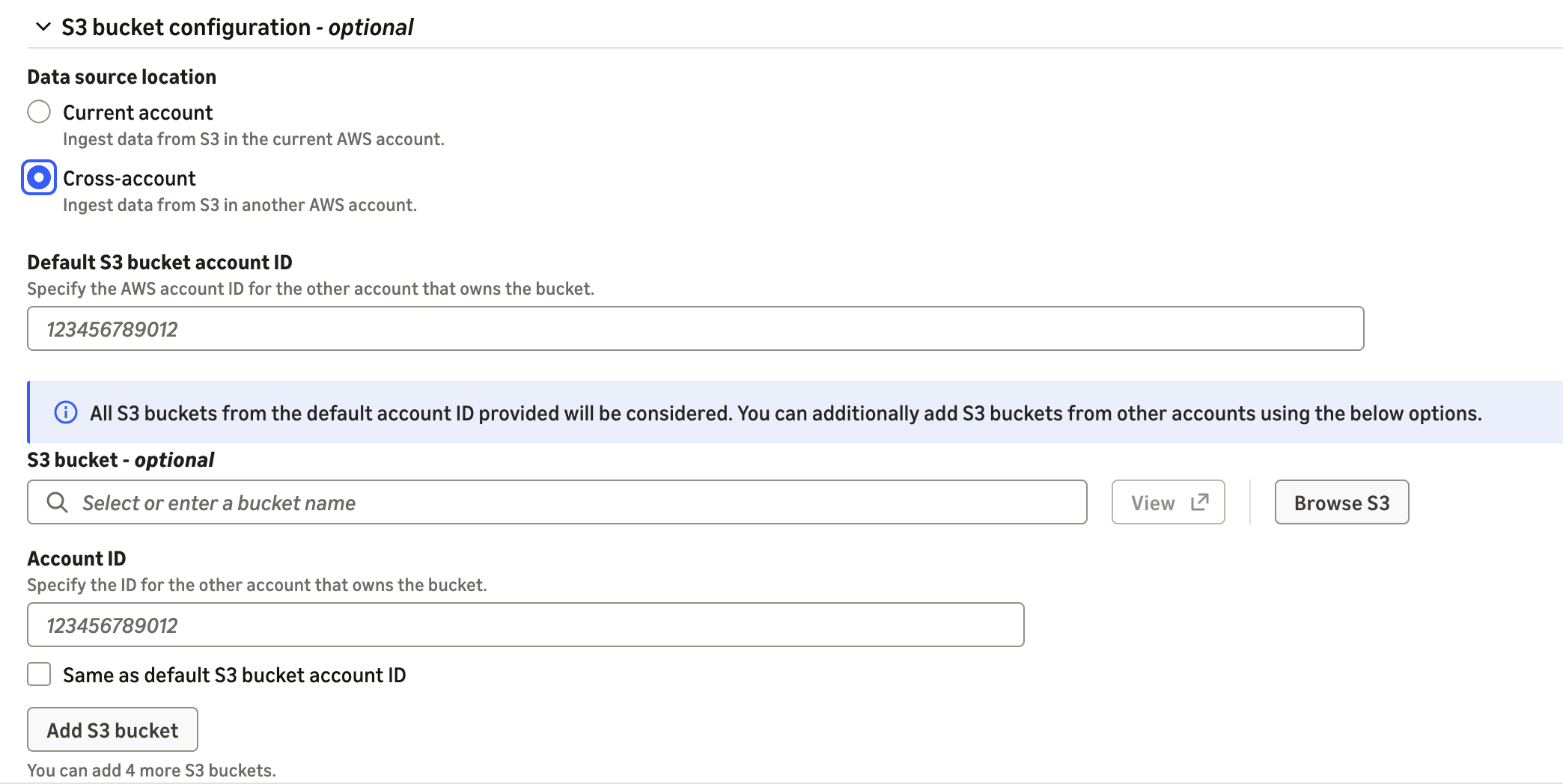
Determine 4: Choosing an Amazon S3 bucket and optionally available cross-account entry
To get began, select Create ingestion job and full the configuration, after which select Validate and proceed. On this web page, evaluation the configuration, enter a reputation for the ingestion job or stream, and begin the ingestion. The ingestion job or stream then seems on the Ingestion tab of the Amazon OpenSearch Serverless (NextGen) assortment for a managerial view.
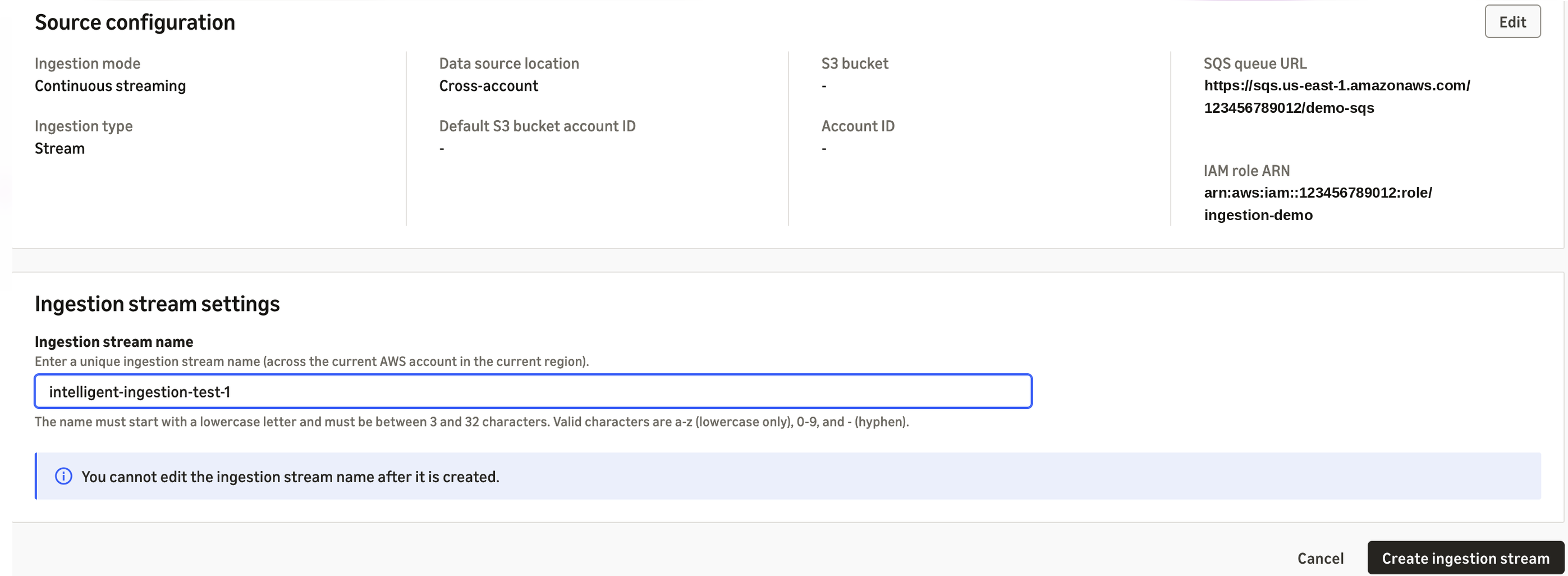
Determine 5: Reviewing and naming the ingestion job earlier than beginning
After it’s began, clever ingestion first scans the S3 bucket for information sorts and determines the processing mechanism for the content material (structured information, unstructured information, or information with photos). Clever ingestion routinely handles the duties for the ingestion. You’ll be able to monitor the variety of paperwork it has scanned and listed on the identical web page. Your information is now searchable in Amazon OpenSearch Serverless.
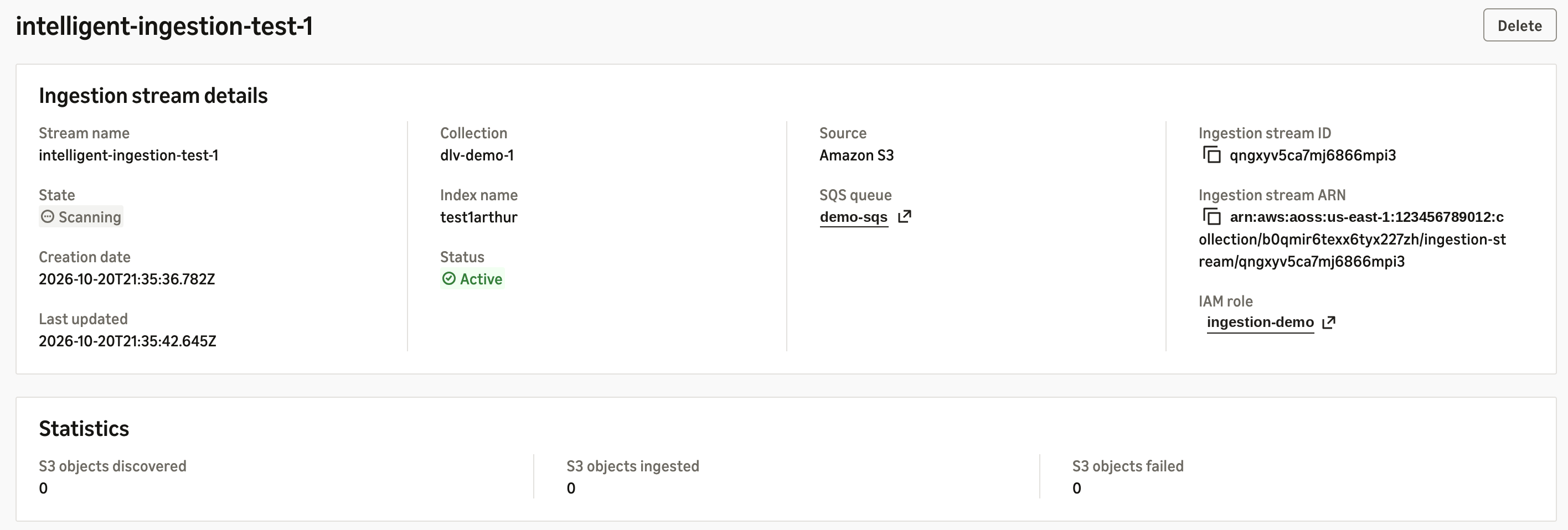
Determine 6: Monitoring paperwork scanned and listed
Value
Clever ingestion costs just for what you really use.
Structured information comparable to JSON will be processed and ingested on to OpenSearch Serverless for indexing. You pay for the usual OCU for every information ingestion employee whereas it’s actively working. After the ingestion job completes, it routinely terminates and stops the billing.
Unstructured information comparable to PDF and Phrase paperwork requires extra parsing, chunking, and in some instances picture understanding. Clever ingestion can routinely use the serverless indexing OCU (inside your predefined limits) to extract textual content and chunk the pages into structured information. It costs the usual OCU price, for instance $0.24 per hour in US East (N. Virginia). This incurs an extra cost on high of structured information ingestion. Based mostly on our inner testing, the one extra OCU can course of 600 PDF pages per hour, which is $0.40 per 1,000 PDF pages processed and prepared for ingestion. Clever ingestion makes use of Amazon Nova 2 Lite to translate the photographs inside the PDF and Phrase information into semantic meanings. The Amazon Bedrock mannequin inference price is precisely the identical because the public charges on Amazon Bedrock for Nova 2 Lite: $0.30 per 1M enter tokens and $2.50 per 1M output tokens. Based mostly on our inner testing, each 1,000 photos consumes 0.5M enter tokens on common, and 0.5M output tokens on common. You pay round $1.40 to course of 1,000 photos.
Clear up
To keep away from future costs, delete the assets you created for this walkthrough. Delete any Ingestion Streams you created, then delete the OpenSearch assortment and the pattern paperwork in your S3 bucket for those who now not want them. Ingestion Jobs cease consuming capability after they full.
Conclusion
On this submit, we confirmed how Amazon OpenSearch clever ingestion turns enterprise paperwork in Amazon S3 into RAG-ready intelligence with out an ingestion pipeline to handle. You select a supply, a processing conduct, and a vacation spot. Clever ingestion then parses your paperwork, describes their photos, chunks the content material, generates vector embeddings, and indexes the outcomes. It scales along with your workload and costs just for lively processing. What as soon as took weeks of pipeline engineering now takes just a few clicks or one API name, so your staff can concentrate on the search and generative AI experiences your customers want. Clever ingestion is on the market at this time for Amazon OpenSearch Serverless (NextGen) collections, with Amazon S3 as the info supply, in six supported AWS Areas.
Able to make your paperwork searchable? Open the Amazon OpenSearch Service console, select your assortment, and create your first Ingestion Job. Begin with a small set of paperwork to see ends in minutes, then add an Ingestion Stream to maintain your index in sync as your content material grows. To study extra, see Clever ingestion within the Amazon OpenSearch Service Developer Information. For pricing particulars, see Amazon OpenSearch Service pricing.
In regards to the authors