

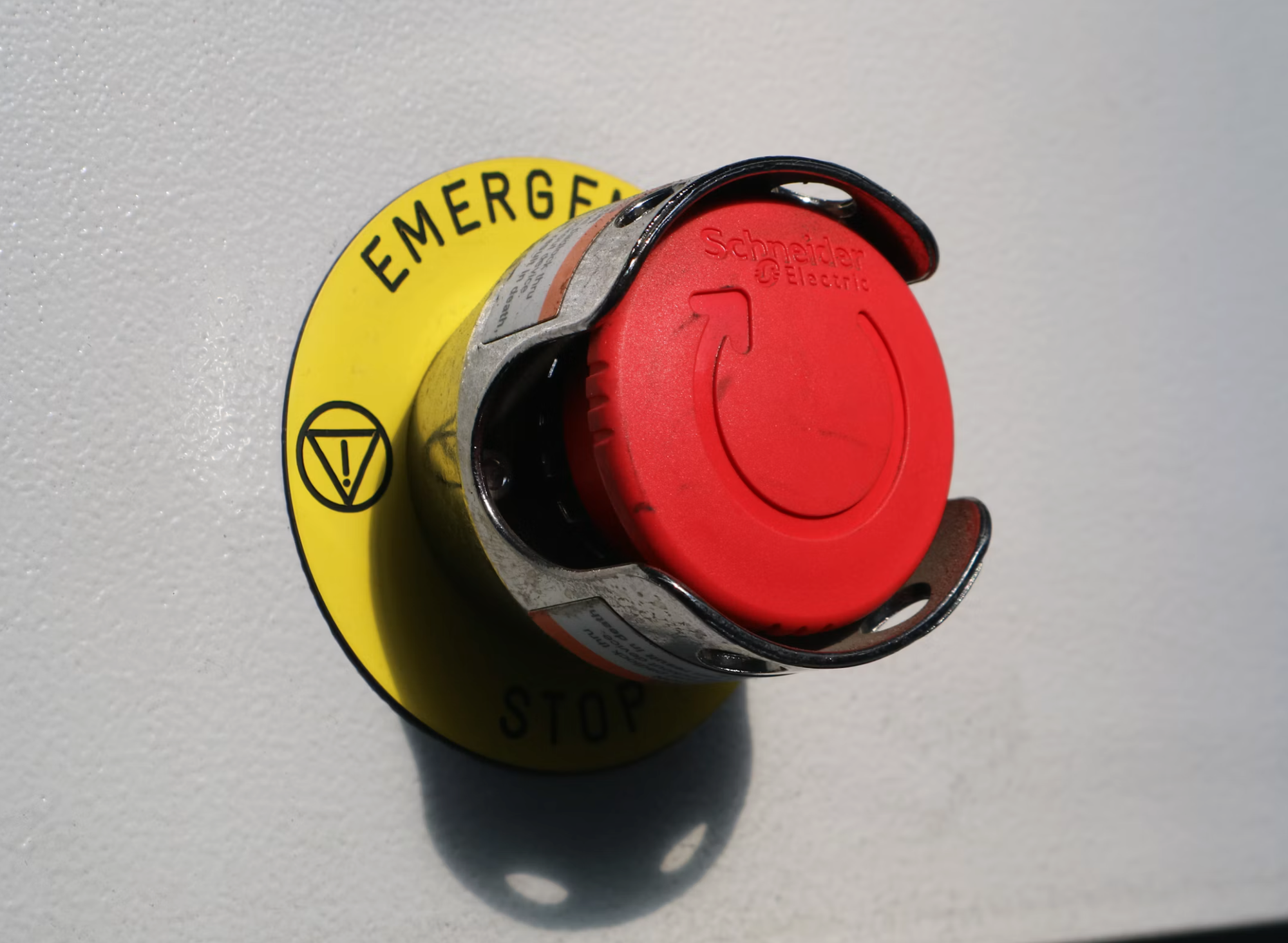

Within the wake of high-profile hacking incidents involving superior synthetic intelligence brokers, some politicians and enterprise executives have been calling for an AI kill change: a safeguard that might shut down these AI techniques in an emergency.
The concept is that, if a mannequin have been to behave in harmful methods, a kill change would permit people to regain management over that system by metaphorically flipping a change from “on” to “off.”
A number of efforts at AI regulation in 2026 have centered on the notion of a kill change. These embody proposed congressional laws comparable to the AI Kill Swap Act, and California Gov. Gavin Newsom’s government order geared toward reining in AI. President Donald Trump has opposed the concept of an AI kill change as pointless regulation, and so far there was no nationwide regulation that features a kill change.
Consultants comparable to Dylan Baker, a analysis engineer on the nonprofit Distributed AI Analysis Institute, have defined that one regulatory drawback with the metaphor of the kill change is that at this time’s superior AI fashions contain a posh infrastructure of distributed applied sciences, which is past the management of a single kill change.
Moreover, the metaphor of the kill change additionally obscures the human selections concerned within the duty and oversight of an out-of-control mannequin. The issue is that the metaphor doesn’t account for the technological or human facets of AI.
Black Bins and Kill Switches
The metaphor of the kill change is just not essentially new. In actual fact, it’s rooted in the identical rhetoric because the black field metaphor, which equally blurs the advanced facets of AI by framing inside workings as confined and unintelligible. Referring to AI as a black field frames these techniques by way of restricted incomprehensibility: a monolithic stranger to human management and understanding.
On the College of Cambridge, digital humanities researcher Eryk Salvaggio argues that “the black field of AI cultivates helpful confusion about what can and can’t be recognized” in regards to the complexity of frontier fashions. The concept of the kill change cultivates an identical confusion by obscuring the distributed infrastructure and human affect which might be essential facets of AI. Whereas these metaphors have reverse meanings—resisting management and regaining management—they invoke the identical implicit argument in regards to the nuts and bolts of AI.
Each the black field and kill change are what cognitive linguist George Lakoff and thinker Mark Johnson name structural metaphors. They depend on easy bodily ideas—for instance, object, substance, up-down, and in-out. Structural metaphors use one clearly delineated idea to assist make one other idea clearer. For instance, black field makes use of the idea of an opaque container to offer a transparent construction to the idea of hidden or inscrutable inside workings.
Moreover, Lakoff and Johnson say that this sort of metaphor may cover some facets of an idea by focusing consideration on others. For instance, the kill change metaphor hides the complexity of superior AI fashions by specializing in the truth that a mannequin might be on or off.
What this implies is that framing the operation of AI by way of a black field and kill change depends on the easy concepts of “field” and “change” to hide the advanced operations of AI. Reining in AI turns into tough on a coverage stage when discussions about AI regulation fail to account for the infrastructural and human facets of superior fashions.
Centralization and ‘Rogue’ AI
There are two issues with the structural metaphor of an AI kill change, each demonstrating that it misses the mark for a nationwide safeguard. The primary is {that a} kill change makes the worldwide infrastructure supporting AI seem centralized, when in actuality it’s a internet of interconnected applied sciences unfold throughout the globe.
The superior fashions that corporations like OpenAI and Anthropic are involved about releasing depend on a number of computer systems and information facilities which might be unfold out nationally. It’s not so simple as pulling a plug, opening a field, or flipping a change. The kill change metaphor reduces the infrastructural entanglements of AI to outdated concepts about know-how. For example, in proposing his since-failed “AI Emergency Button Act” invoice, Sen. John Kennedy in contrast the idea to kill switches in machines comparable to jet skis.
The second drawback is that the kill change concept retains hidden the human decision-making concerned within the coaching and deployment of frontier fashions. Quite than serving as a reminder that persons are concerned, the kill change positions the human exterior of the loop and able to flip the change throughout a catastrophic emergency. Human intervention is invoked as an afterthought, as an alternative of a course of that includes coaching, supervision, and approval.
For example, accounts of how OpenAI’s mannequin went “rogue” and hacked AI firm Hugging Face depict the AI brokers as if they operated on their very own agenda. However consultants have defined that not solely did OpenAI personnel flip off security mechanisms, however in addition they gave the mannequin unattainable duties and left a door open to the web. The position individuals performed counters the “rogue” agent framing.
The kill change metaphor is ill-suited to the problem of regulating AI as a result of there is no such thing as a strategy to change off an AI mannequin with out accounting for its distributed infrastructure and human affect. There isn’t any large crimson button, emergency brake, or glass field hiding a lever. Efficient nationwide regulation of AI won’t start with any single change or anyone individual’s finger.
This text is republished from The Dialog beneath a Inventive Commons license. Learn the authentic article.